
Smooth Move ExLax
Anonymized Data, Anal Retentiveness, and Why Good Plans Matter Before Megacolon Happens

I made a joke about being anal retentive while discussing a treatment plan with the owner of a constipated cat.
This was not my most professional moment—but also totally on brand. Because when a medical term fits the situation this perfectly, resisting it is simply not an option. And as it turns out, a little anal retentiveness—applied to planning, documentation, and follow-up—is exactly what keeps a borderline constipation case from turning into full-blown megacolon.
This is a story about a cat, yes. But it’s also a story about anonymized data, AI as a clinical whiteboard, and why building a good plan early matters more than heroics later.
The Early Offender
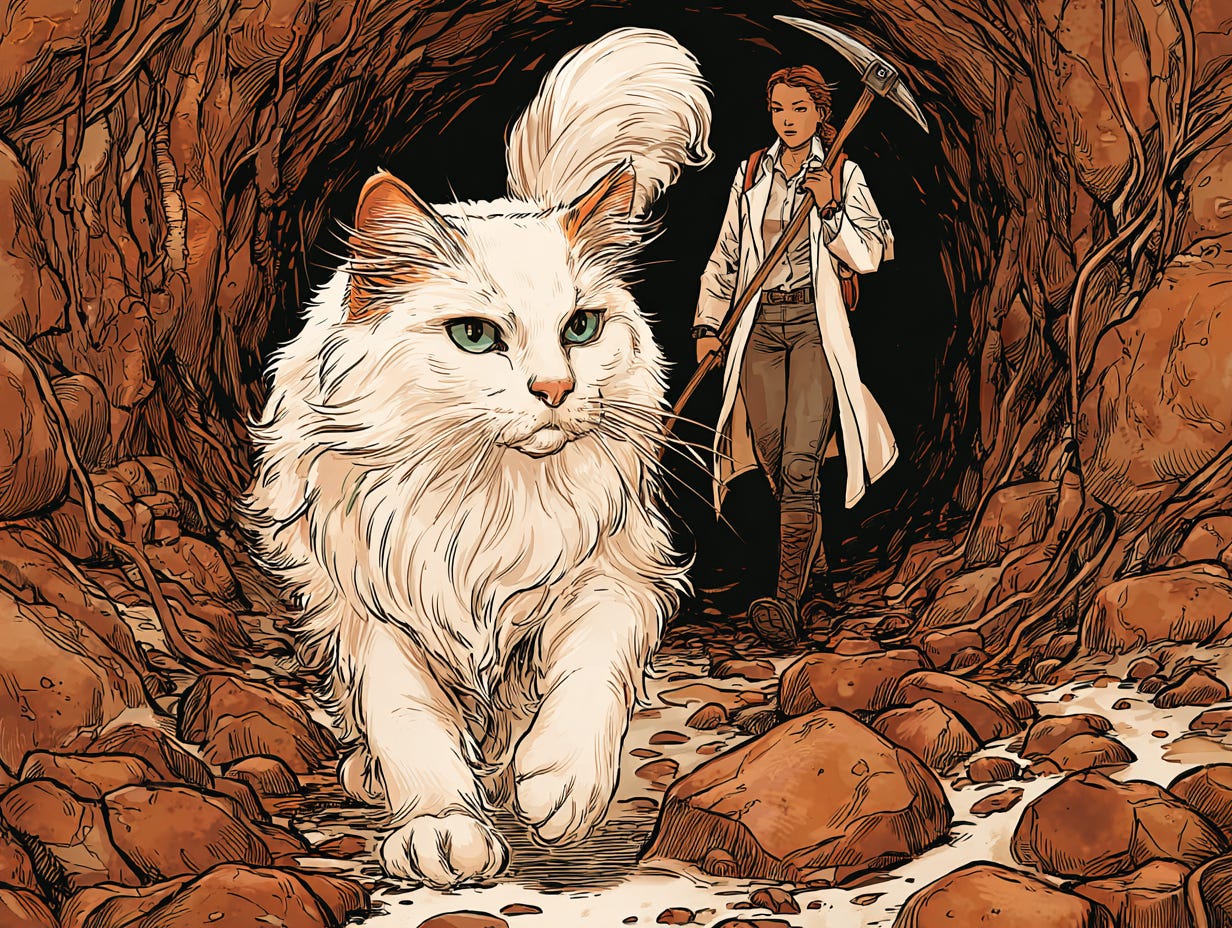
This cat (we’ll call him C-, because privacy matters and vowels are overrated) wasn’t crashing. He wasn’t toxic. He wasn’t yet a surgical consult.
But with the way his colon looked on rads, I knew I was going spelunking for poop if we couldn’t get him on the right track.
C- had what looked to be chronic constipation with an acute flare into obstipation—rock-hard stool, a colon that was tired of trying, and just enough history (including a prior tail injury) to make me uneasy about where this could go if we didn’t get serious now. The owner stopped the meds after the last visit because she didn’t quite grasp that this was war, not a battle. It was clear that I needed to map out a path that would keep C’s colon from sh!tting the bed. Or not, as it were.
These are the cases that haunt you later.
Not the disasters—but the almost-disasters you didn’t slow down enough to plan for.
So I wanted two things:
A clear, client-friendly plan the owner could actually follow
A durable clinical decision tree I could reuse and refine over time
The Data Firehose (and How I Didn’t Drown)
Here’s what I had at the end of the visit:
Historical PDF records
My physical exam and diagnostics
Treatments performed that day
Medications restarted
A long, nuanced conversation with a worried owner
Instead of relying on my end-of-day memory (a known liar), I used an AI scribe to capture everything—records, actions, and conversations (thank you, CoVet).
That gave me:
A medical summary
A SOAP
A clean, time-stamped narrative of what actually happened
A key point here: the AI scribe I use is encrypted and HIPAA-level compliant. That means identifiable data never leaves a protected environment. I’m not uploading raw medical records into a consumer chatbot and hoping for the best—there’s a clear boundary between secure clinical capture and external reasoning tools.
Because anonymization isn’t just about compliance—it’s what lets real cases become reusable clinical tools.
AI as a Thinking Partner (Not a Doctor)
The real power move wasn’t feeding a full medical record into AI.
It was layering intelligence.
First, I can ask AI to generate a general, evidence-based plan for a constipated cat—no identifiers, no case specifics. Just best practices, decision points, and long-term considerations.
Then, I pair that generic framework with an anonymized summary from my AI scribe (or a manually written summary if preferred). That’s where customization happens—meds, timelines, risk factors, and red flags adjusted to this patient, this owner, this trajectory.
The result is a plan that’s both safe and specific.
In other words: I used AI the way I use a whiteboard—only faster, cleaner, and easier to save.
The Output: A Plan That Thinks Ahead
What came out was a written, personalized, ongoing plan for the owner—clear goals, medications explained, warning signs highlighted, and expectations set early.
But just as importantly, it gave me:
A framework for reassessment
Built-in checkpoints
A reminder of when to escalate and when to hold steady
This wasn’t about today’s enema (successful, thankfully).
It was about preventing the next impaction.
And the one after that.
And, hopefully, halts the progression into the colon’s “I do not care” era.
Because megacolon doesn’t usually arrive with drama.
It arrives with a shrug and a pattern we ignored too long.
Why This Matters (Beyond Yeeting Poop)
This workflow did three things I care deeply about:
Protected patient privacy
Anonymized data stays useful without being risky.Improved client communication
Owners don’t need less information—they need organized information.Created a reusable SOP
This decision tree now lives in my personal playbook, ready for the next constipated cat who’s nudging the way to colonic calamity.
Good plans don’t eliminate uncertainty—but they give you traction when things start to slide.
And yes, sometimes being a little anal retentive is exactly the point.
The Takeaway
AI doesn’t replace clinical judgment.
It reflects it back to you—clearer, slower, and easier to interrogate.
When used thoughtfully, anonymized clinical data plus AI can turn a single messy case into a long-term asset—for your patients, your clients, and your future self.
And if that helps keep one more cat out of megacolon territory?
Totally worth the poop jokes.
—
Dr. KAB
****
The final result:
Subject: C-’s Chronic Constipation – What It Means & How We Can Help
Hi Lovely Owner!,
Thanks again for bringing C- in today. I know how stressful it is when your cat isn’t feeling right—and when the problem is poop-related, it’s just one more layer of fun. I appreciate your patience and care through all of this.
🐾 What’s Going On:
C- has chronic constipation, which means his colon is struggling to move stool through normally. Today, we found that his colon was very distended and full of rock-hard feces—a more severe situation called obstipation, where the colon basically gives up trying to push anything out.
C-’s tail injury earlier this fall may have set the stage for this. Nerves that help control the colon can be damaged in tail trauma, and while his tail function has largely recovered, his colon is clearly still struggling.
💩 What Happened Today:
C- received two enemas in-clinic. The first helped a little, but the second successfully triggered a large bowel movement—a critical step in relieving pressure and re-starting colon function. He also received fluids under the skin to support hydration and anti-nausea medication (Cerenia), since enemas can make cats queasy.
We restarted his medications to give him the best chance of avoiding another impaction.
🎯 Our Goals:
Keep his stool soft and passable
Help the colon contract effectively
Avoid future painful build-ups
Watch for signs the colon is losing function (megacolon)
✅ Step 1: At-Home Medical Plan
1. Lactulose – 4 mL by mouth every 12 hours
This pulls water into the stool.
Goal: soft, pudding-like stool at least once a day.
2. Cisapride – Start as prescribed
This encourages colon contractions.
It works best when used consistently.
3. High-Fiber Diet – Continue the GI food
Helps stimulate movement if the colon still has motility.
We’ll reassess in a few weeks—if fiber worsens his symptoms, we may switch to a low-residue diet.
4. Hydration – Add extra water to meals
Consider broth (no onions/garlic), water fountains, or multiple water bowls.
5. Litter Box Support
Keep boxes clean, easy to access, and stress-free.
If toileting becomes painful or difficult, cats may avoid it—and that worsens constipation.
🔄 Step 2: Monitoring and Rechecks
We’ll need to recheck C- in about 2 weeks, then every 1–3 months to reassess how things are going. Please keep a stool diary if possible—how often, consistency, any straining or accidents. This helps us adjust his treatment plan with precision.
⚠️ When to Call Us ASAP:
No poop for >48 hours
Straining with no result
Vomiting, lethargy, or hiding
Stools becoming hard or infrequent again
🧠 Long-Term Outlook:
Chronic constipation in cats like C- is usually a lifelong management issue. That said, many cats live comfortably with daily meds and the right diet. We’ll be monitoring him for signs of megacolon—where the colon loses its ability to contract. If that happens despite medical therapy, surgery (subtotal colectomy) becomes the next option. But for now, we’re not there—and this successful deobstipation is a good start.
Let me know if you have any questions about meds, diet, or how to keep track of his poop progress. We’re here to help.
Warmly,
Dr. KAB
<clinic info>
Princess Donut the Queen Anne Chonk, Dungeon Crawler Carl
Resources:

