
Aspirational Irony
Winning the triage lottery

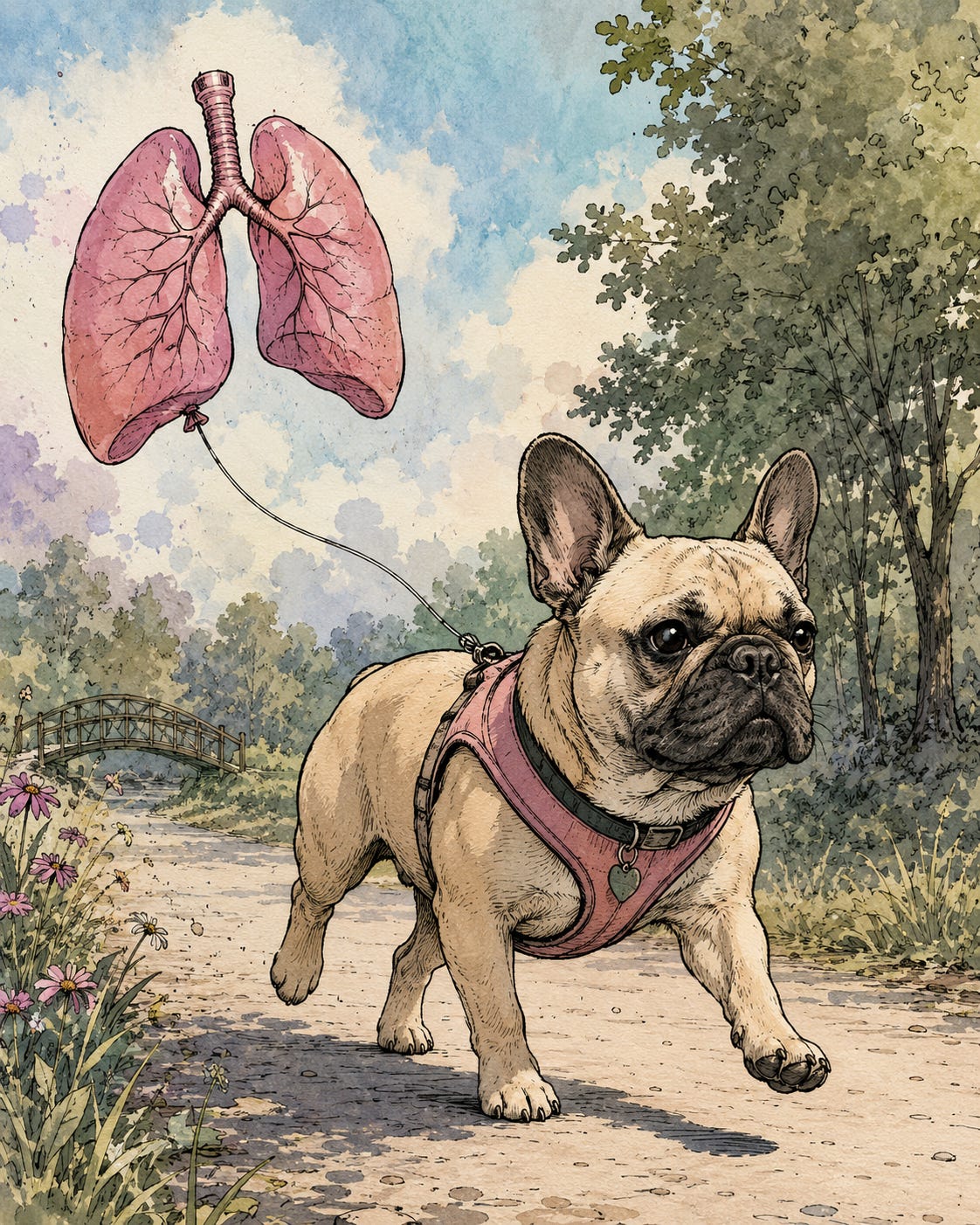
You know what sucks worse than a colonoscopy? Aspirating during your procedure and obliterating your left lung field.
It could have been worse. I’m 50 years old. I’m in relatively good shape. I don’t smoke. My BMI is WNL. I only aspirated stomach fluids. Still, seeing my O2 sats bounce between 80 and 90 was a bit scary. Tachycardic, tachypneic, and shivering; it was hard being the patient when I knew the risks.
Some things I found interesting:
I was given IV steroids immediately along with an albuterol nebulizer treatment. These things helped immediately. I was totes coughing up bloody mucus, but I was breathing much better within an hour.
Antibiotic choice: it was an IV fluoroquinolone to start.
ProCalcitonin: This is an inflammatory/sepsis marker used in human medicine to determine if antibiotics are warranted.
Labs: metabolic, CBC, troponin, blood cultures, and magnesium
Let’s talk terminology.
An acute aspiration event.
Not aspiration pneumonia.
Aspiration pneumonitis.
And yes, I learned very quickly that apparently those are not interchangeable terms.
I found that out after confidently referring to it as aspiration pneumonia in my One Health groups and getting lovingly—but firmly—corrected by a couple of physicians.
Ironically, the emergency physician who first saw me had called it aspiration pneumonia. The hospitalist was more specific.
Medicine is funny like that. Shifting terminology depending on not just the species of the patient, but also the focus of the provider.
Human medicine spends considerable effort trying to determine whether aspiration remains a sterile inflammatory injury (chemical pneumonitis) or has progressed into bacterial pneumonia.
That distinction drives antimicrobial stewardship.
Procalcitonin—while imperfect—is one tool many human hospitals use alongside serial examinations and laboratory trends to help decide whether antibiotics are actually warranted. My background research notes also point out that veterinary procalcitonin assays currently don’t appear to provide the same diagnostic value, making serial examinations, CBCs, and thoracic imaging far more practical for general practice.
That immediately made me start thinking about veterinary medicine.
Because frankly? We don’t have much consensus.
My review of the available veterinary literature found no ACVIM-style consensus statement specifically addressing the immediate sterile aspiration event in dogs and cats. Instead, management tends to be extrapolated from human medicine and individual institutional protocols rather than standardized guidelines.
And now for that irony.
I’d been spending weeks polishing my Brachycephalic Aerodigestive Complex algorithms, anesthesia protocols, and technician education materials.
Then suddenly.… I wasn’t the veterinarian anymore. I was the patient.
Now that I’m able to maintain my Os, I’ll get back to being the doc.
BOAS and Aerodigestive Disorders
The BOAS protocols came out of Dr. Carol Reinero’s fantastic lecture at Fetch Nashville on aerodigestive disorders.
One of the biggest takeaways from this lecture was that approximately 97% of brachycephalic dogs have concurrent respiratory and gastrointestinal disease, reinforcing that BOAS is far more than simply an airway problem. The lecture emphasizes that upper-airway obstruction creates negative intrathoracic pressure, promoting reflux, hiatal hernia, and ongoing airway inflammation—a vicious cycle that informs your updated algorithms and anesthesia recommendations.
That lecture fundamentally changed how I’m approaching these patients.
Now I have:
my updated BAC algorithms
anesthesia recommendations
technician training
client education handouts
All because it reframed BOAS as an aerodigestive disease rather than simply an airway disease. We spend so much time talking about stenotic nares or elongated soft palates and little time on what silent reflux looks like.
One Question I Can’t Shake
My own experience also left me wondering about something we rarely discuss in veterinary medicine.
Acute aspiration pneumonitis.
Specifically...
Should we be having a more nuanced conversation about the early, judicious use of corticosteroids in carefully selected veterinary patients experiencing known acute aspiration events before infection has declared itself?
The literature certainly doesn’t give us a consensus answer. My protocol draft notes that any consideration of corticosteroids is extrapolated largely from selected human data and should be reserved for carefully chosen patients without evidence of sepsis—not as routine therapy.
But maybe that’s exactly why it’s worth discussing.
I’m not advocating for a new standard of care. I’m asking questions.
Has anyone developed an approach they’re comfortable with?
Have any of the ECC or internal medicine folks changed their thinking after witnessing known aspiration events under anesthesia?
And for those of you in general practice...
How are you deciding when an aspiration event is simply inflammation?
And when it has crossed the line into bacterial pneumonia?
I’d genuinely love to hear how others are approaching these cases.
Here is the CE summary of the lecture. If you get a chance to see Dr. Reinero speak in person, please take the opportunity. She is an excellent speaker, and the information is practical for GPs as well as emergency veterinarians.

Staff Training:
Client Handout:
I’m still working out my plan for managing acute aspiration events as well as BOAS anesthesia protocols. More on those later!